What is NEET UG?
NEET UG is India’s national-level medical entrance examination conducted for admission into MBBS, BDS, AYUSH, veterinary, and other medical courses. It is one of the most competitive entrance exams in the country.Students from all over India appear for NEET to secure seats in top government and private medical colleges. Since the competition level is extremely high, understanding the exam pattern becomes essential for success.
Here are common reasons why beginners face confusion:Lack of awareness about NEET marking schemeConfusion between board exams and entrance examsNot knowing chapter weightageDifficulty understanding MCQ-based preparationIgnoring time managementLack of proper guidanceOverdependence on multiple resourcesStudents often realize these mistakes only after writing mock tests. Therefore, learning the exam pattern early can save time and improve preparation quality
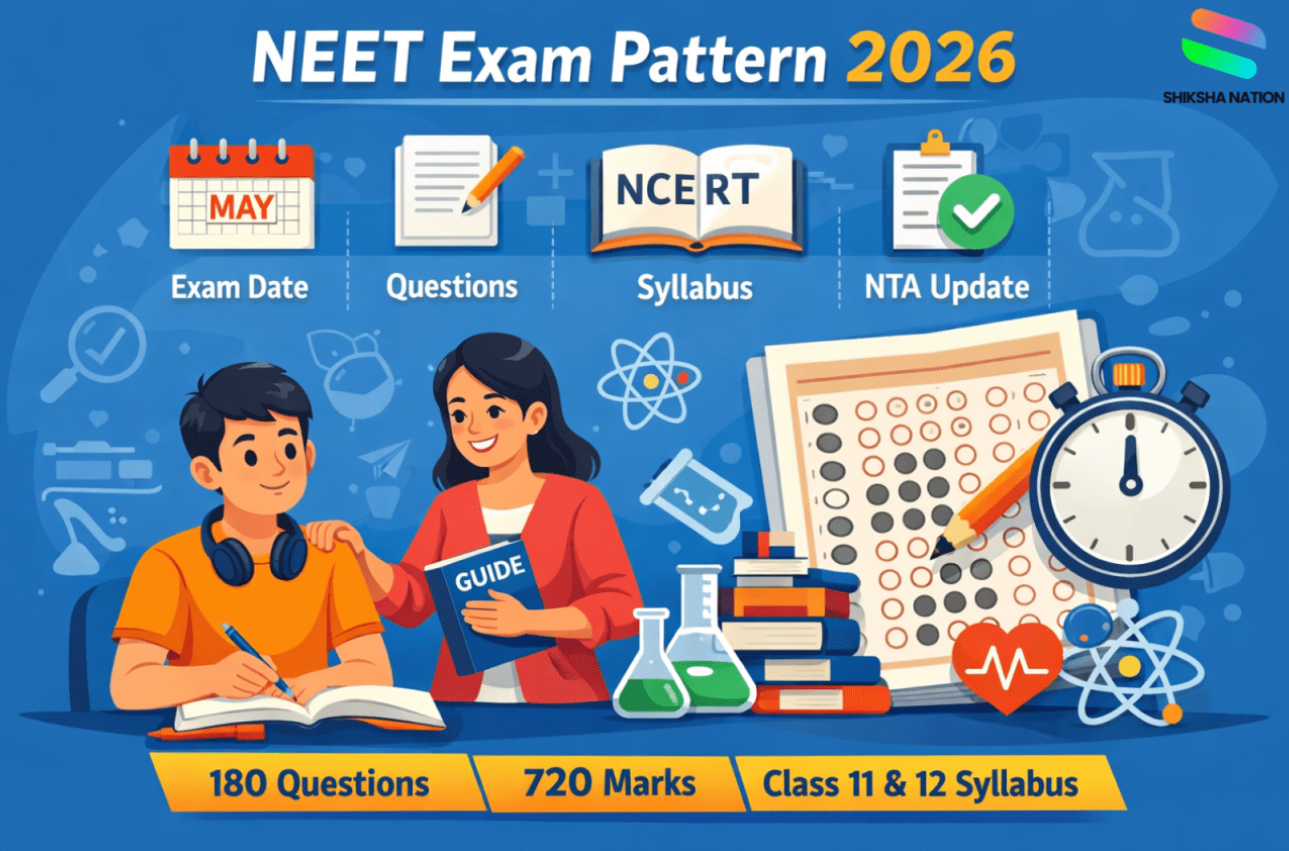
Here is a quick overview of the NEET UG exam structure:ParticularsDetailsExam ModeOffline (Pen & Paper)Question TypeMultiple Choice Questions (MCQs)Total Questions180Total Marks720SubjectsPhysics, Chemistry, BiologyExam Duration3 Hours 20 MinutesNegative MarkingYesLanguage OptionsMultiple LanguagesUnderstanding these basic details helps students mentally prepare for the exam environment.
The NEET examination is divided into three major subjects:BiologyBiology carries the highest weightage in NEET.SectionQuestionsMarksBotany45180Zoology45180Total Biology Marks: 360Since Biology contributes 50% of the total marks, students must prioritize NCERT Biology thoroughly.Important Biology TopicsHuman PhysiologyGeneticsEcologyBiotechnologyReproductionPlant Physiology
Chemistry
Chemistry is divided into:Physical ChemistryOrganic ChemistryInorganic ChemistryQuestionsMarks45180Important Chemistry TopicsChemical BondingThermodynamicsEquilibriumOrganic ReactionsCoordination CompoundsElectrochemistry
Physics
Physics is considered challenging by many students because of numerical problems and conceptual application.QuestionsMarks45180Important Physics TopicsMechanicsModern PhysicsCurrent ElectricityThermodynamicsOpticsElectrostatics
Understanding the NEET Marking Scheme
One of the most important parts of the NEET exam pattern is the marking scheme.NEET Mark DistributionResponse TypeMarksCorrect Answer+4Wrong Answer-1Unanswered Question0This means accuracy is extremely important.Many students lose marks because of guesswork. Negative marking can significantly reduce the final score if students attempt questions without confidence.
Importance of Time Management in NEET
The NEET exam lasts for 3 hours and 20 minutes. Students need to answer 180 questions within this limited time.Average time available per question:200 minutes180 questions≈1.11 minutes per question\frac{200\ \text{minutes}}{180\ \text{questions}} \approx 1.11\ \text{minutes per question}180 questions200 minutes≈1.11 minutes per questionThis means students get nearly one minute per question.Without time management skills, even well-prepared students may fail to complete the paper.Effective Time Management StrategyBiologyComplete firstEasier and memory-basedSaves timeChemistryAttempt secondMix of theory and numericalsPhysicsAttempt carefullyNumerical calculations require more time
Many beginners make the mistake of preparing for NEET like board exams.Board ExamsTheory-orientedDescriptive answersFocus on writingNEETMCQ-basedConcept-orientedSpeed and accuracy importantStudents must adapt their preparation methods according to NEET requirements.
1. Ignoring NCERTMany students study advanced books without mastering NCERT.In NEET, especially for Biology, NCERT is the foundation.2. Not Practicing MCQsReading theory alone is insufficient.Students should solve:Previous year questionsTopic-wise MCQsMock tests3. Fear of PhysicsPhysics becomes difficult only when concepts are weak.Daily practice improves confidence.4. Lack of RevisionStudents forget concepts without revision.Weekly revision schedules are essential.5. Using Too Many BooksUsing multiple resources creates confusion.Stick to:NCERTStandard reference booksCoaching materials
Best Preparation Strategy for Beginners
Step 1: Understand the SyllabusBefore starting preparation, students should understand:Important chaptersWeightageDifficulty levelStep 2: Create a Study PlanA balanced schedule should include:Daily revisionMCQ practiceMock testsConcept learningStep 3: Focus on NCERTEspecially for:BiologyInorganic ChemistryStep 4: Solve Previous Year QuestionsPYQs help students understand:Question trendsDifficulty levelFrequently asked conceptsStep 5: Take Mock TestsMock tests improve:Time managementSpeedAccuracyConfidence
How Coaching Institutes Help Students Understand the NEET Exam Pattern
Many students join coaching institutes because expert guidance simplifies preparation.Benefits include:Structured learningRegular testsPersonalized mentoringDoubt-clearing sessionsPerformance analysisStudents in Kerala increasingly prefer integrated coaching programs because they combine school studies and NEET preparation effectively.
Role of Mock Tests in Understanding NEET Pattern
Mock tests simulate the real examination environment.Benefits of mock tests:Improve speedIdentify weak areasReduce exam fearEnhance confidenceImprove question selection strategyExperts recommend attempting at least one mock test weekly during early preparation stages.
High-Weightage Chapters for NEET
BiologyHuman PhysiologyGeneticsEcologyBiotechnologyChemistryChemical BondingThermodynamicsOrganic ChemistryPhysicsModern PhysicsCurrent ElectricityMechanicsPrioritizing these chapters can improve scoring potential.
Tips to Avoid Negative Marking
Negative marking is one of the biggest reasons students lose ranks.Smart StrategiesAttempt Easy Questions FirstBuild confidence early.Avoid Blind GuessingRandom answers reduce scores.Read Questions CarefullyMany mistakes occur due to misreading.Improve Accuracy Through PracticeMore MCQs improve precision.
Ideal Daily Routine for NEET Beginners
MorningBiology revisionNCERT readingAfternoonPhysics concepts and numericalsEveningChemistry practiceNightRevision and MCQsConsistency matters more than studying for extremely long hours.
NEET preparation can become stressful.Students should:Sleep properlyTake short breaksExercise regularlyAvoid comparisonStay consistentMental health directly affects concentration and memory.
Success in NEET is not about studying one day for 12 hours and skipping the next three days.Small daily improvements create long-term success.Students who consistently revise, practice MCQs, and analyze mistakes perform better in the examination.
Final Month Preparation Strategy
During the final month:Revise only important notesAvoid new booksPractice mock tests dailyFocus on weak areasImprove accuracyThe final revision phase is crucial for score improvement.
Is NEET difficult for beginners?NEET is competitive but manageable with proper planning and consistency.Which subject carries the highest marks?Biology carries the highest weightage with 360 marks.Is NCERT enough for NEET?NCERT is essential, especially for Biology and Chemistry.How important are mock tests?Mock tests are extremely important for time management and accuracy improvement.Can average students crack NEET?Yes. Consistency, smart preparation, and proper guidance matter more than intelligence alone.
Conclusion
Not understanding the National Eligibility cum Entrance Test exam pattern is one of the biggest mistakes beginners make. However, once students understand the structure, marking scheme, subject distribution, and preparation strategy, NEET preparation becomes more organized and effective.Success in NEET requires:Strong NCERT foundationConsistent revisionRegular MCQ practiceMock testsProper time managementStudents who start preparation with clarity and discipline can significantly improve their chances of securing a good medical seat.